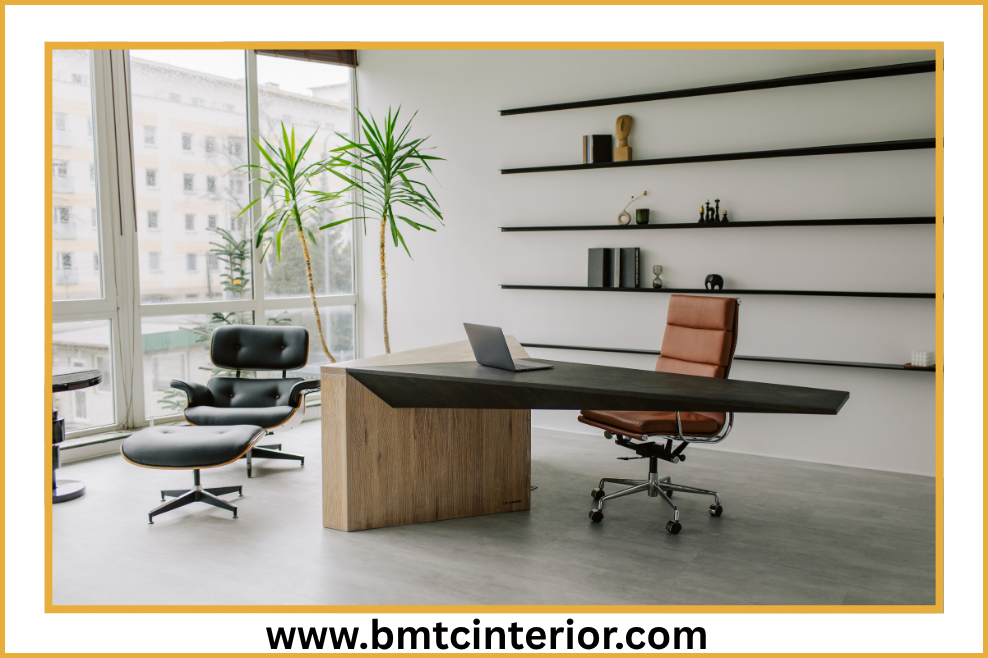
A CEO office is not just a room. It is your most powerful business tool — the space where deals close, decisions are made, and your company’s culture becomes visible. In Muscat, where global ambition meets Omani tradition, getting the design right requires local expertise.
BMTC Interior Design & Fitouts has delivered 250+ commercial and executive fit-outs across Muscat, Seeb, Al Khuwair, Bawshar, Sohar, Sur, and Nizwa since 2008. This guide shares everything you need to know about CEO office design in Muscat — from layout strategy and material selection to compliance and cost.
Why CEO Office Design in Muscat Is Different
Muscat is not Dubai. It is not Riyadh. The capital city of Oman has its own architectural rhythm — one that blends Islamic geometry, coastal lightness, and modern business professionalism.
A successful CEO office design in Muscat must address:
– Muscat Municipality and Civil Defence approvals for commercial interiors
– Extreme summer heat (45°C+) affecting glass selection, HVAC, and material choices
– Cultural preferences for privacy, dignity, and subtle luxury
– Growing demand for smart and tech-integrated offices in Al Mouj and Al Khuwair
– Blend of Omani heritage with global executive standards
BMTC builds offices that are locally rooted and globally competitive.
—
Core Principles of an Effective CEO Office
Privacy Without Isolation
Sensitive conversations — legal matters, salary discussions, board decisions — require acoustic privacy. But complete isolation from your team creates disconnect. Great CEO office design creates a private core with deliberate visual connections to the broader workspace.
Brand and Status Alignment
Your office communicates your company’s position before you say a word. A finance CEO needs solid materials and formal meeting space. A tech startup CEO may prefer clean, minimalist design. In Muscat, many executives incorporate Omani heritage elements — local marble, arish-inspired screens, copper detailing — to ground their workspace in authentic identity.
Functionality Across Three Work Modes
The best CEO offices in Muscat are designed around three modes of work: deep focus (solo desk work), private consultation (one-on-one or small group), and informal collaboration. Every square meter should serve one of these modes.
Comfort and Wellbeing
Executive fatigue is real. Ergonomic furniture, natural light, biophilic elements, and quality air circulation are not luxuries — they are productivity investments. In Muscat’s climate, thermal comfort is non-negotiable.
—
15 Best CEO Office Design Ideas in Muscat
1. The Privacy-First Zoned Layout
Most CEO offices in Muscat fail because they are too open or too closed. The solution is a three-zone layout:
– Focus Zone — Desk area facing a window or inspiring view. This is where deep work happens.
– Meeting Zone — A table for 4–6 people, acoustically separated from the desk but within the same room.
– Refreshment Corner — Coffee station, water, and mini-fridge. In Muscat summers, easy access to cold water is a small but meaningful productivity boost.
For offices in Ruwi or Bawshar where space is premium, zoning works with half-height partitions or acoustic screens — no full walls required.
2. Omani Modern Fusion Style
The most memorable CEO offices in Muscat are not generic Western or aggressively traditional. They are a thoughtful fusion. Use Omani elements sparingly but meaningfully:
– Local stone — Omani marble or limestone on a single accent wall
– Arish-inspired patterns — traditional palm weaving reinterpreted in laser-cut wood screens
– Falaj-inspired water features near the entry zone
– Brass or copper detailing referencing Omani craft traditions
– Framed original works by Omani artists
Pair these with modern furniture, clean lines, and warm neutrals. The result feels globally competitive and authentically Omani.
3. Acoustic Excellence for Confidentiality
Sound travels easily through glass partitions and hollow doors. CEO offices handle confidential matters daily. Best acoustic treatments:
– Acoustic wall panels in fabric or perforated wood
– Double-glazed glass with different pane thicknesses on each side
– Solid core doors with drop seals
– Carpet or acoustic-rated flooring (avoid hard tiles — they amplify noise)
– Ceiling baffles or acoustic clouds in rooms with high ceilings
BMTC delivers acoustic solutions that meet Civil Defence fire ratings while maintaining luxury aesthetics.
4. Smart Lighting Layering
Flat overhead lighting causes shadows and fatigue. Every CEO office needs three lighting layers:
– Ambient lighting — Soft, even light from ceiling fixtures or cove lighting with dimmer controls
– Task lighting — Adjustable pendants or desk lamps directly over work surfaces
– Accent lighting — Picture lights for art, LED strips inside shelving, floor washers for plants
In Muscat, natural light management is critical. Motorized blinds that adjust with the sun’s position are highly recommended. South and west-facing offices need solar films or external shading to prevent heat gain and screen glare.
5. Executive Ergonomic Furniture
A CEO spends hours at their desk. Poor furniture means back pain, fatigue, and lost focus. Essential furniture:
– High-back executive chair with adjustable lumbar support, headrest, armrests, and seat depth
– Standing desk or height-adjustable surface to alternate positions throughout the day
– Visitor chairs that are comfortable but firm — deep lounge chairs make meetings run too long
– A substantial custom desk with integrated cable management and soft-close drawers
BMTC fabricates custom joinery desks in our Muscat workshop — matched to your brand, dimensions, and finish requirements.
6. Biophilic Design for Stress Reduction
Biophilic design connects the human mind to nature. In a high-pressure executive environment, it measurably reduces cortisol levels. Practical options for Muscat:
– Living green wall behind or beside the desk (sansevieria and zamioculcas are ideal — low water, high impact)
– Large potted trees (areca palm, ficus) in naturally lit corners
– Natural materials — wood veneer, local stone, jute, wool, leather
– Preserved sightlines to outdoor greenery or sea views in Al Mouj and Seeb offices
Do not block windows with furniture. Position the desk to maximize the natural view.
7. Custom Joinery and Integrated Storage
A cluttered CEO office signals disorganization. Built-in storage keeps everything in its place while looking intentional. Smart joinery ideas:
– Floor-to-ceiling cabinets with a mix of closed storage and open shelves for awards and books
– A hidden minibar behind mirrored or paneled doors
– Integrated charging drawers with wireless pads inside the desk surface
– Display niches for certifications, trophies, and meaningful objects
– Wall-mounted file storage that reads as a decorative panel
BMTC custom joinery is fabricated locally for a perfect fit and fast installation across all Muscat locations.
8. Advanced Technology Integration
The modern CEO office is a smart control center. Technology should be invisible but powerful. Essential features:
– Motorized blinds and curtains controlled by remote, app, or voice
– Under-desk wireless charging for phones and tablets
– Hidden media wall with a large screen that disappears behind art or sliding panels
– Professional video conferencing system with noise cancellation and auto-framing
– Smart climate control with zoned air conditioning and air quality monitoring
– Motorized pocket doors for silent, space-saving operation
All technology must be rated for Muscat’s ambient temperatures and integrated with your building’s main HVAC system.
9. Statement Art and Brand Identity
Art in a CEO office serves multiple purposes: expressing character, starting conversations, and creating a memorable backdrop for video calls and press photography. Best practices:
– One large statement piece on the wall behind or directly facing the desk
– A curated gallery wall with maps, certifications, or original works
– Sculptural elements on the desk or a dedicated pedestal
– Brand colors subtly carried through upholstery, accessories, and finishes
BMTC produces custom branded signage including 3D metal logos, acrylic nameplates, and LED lettering for executive offices.
10. Premium Material Selection
Every surface in a CEO office communicates company standards. Recommended material palette for Muscat:
– Flooring — Engineered wood, luxury vinyl planks (LVP), or high-grade carpet tiles. Avoid polished porcelain — it creates glare and amplifies noise.
– Walls — Painted drywall, fabric panels, wood veneer, or leather for accent walls
– Desk surface — Solid wood, marble, quartz, or high-pressure laminate with soft-radius edges
– Window treatments — Motorized roller blinds, Roman shades, or full drapery with blackout lining
– Metal finishes — Brushed brass, satin nickel, matte black, or chrome depending on overall style direction
BMTC sources materials locally and internationally. We maintain verified supplier relationships to avoid import delays common in Oman.
11. HVAC and Air Quality for Muscat Summers
Muscat summers exceed 45°C. A stuffy or poorly cooled office is unusable regardless of how well it looks. Beyond standard AC, consider:
– Dedicated zone control for the CEO office, independent from the main open-plan AC circuit
– Fresh air intake with MERV 13 or HEPA filtration
– Humidity control to prevent mold and maintain comfort year-round
– Silent ducted systems with sound attenuators rather than split AC units
– CO2 sensors that automatically trigger fresh air intake as occupancy increases
BMTC handles all MEP works with Civil Defence approved layouts included.
12. Civil Defence and Municipality Compliance
This is not optional. Beautiful offices have been delayed and fined because compliance was overlooked. Key requirements for CEO offices in Muscat:
– Fire-rated doors (minimum 60 minutes for executive offices)
– Smoke detectors integrated with the building alarm system
– Emergency lighting and illuminated exit signs
– Adequate travel distances to nearest emergency exits
– No obstruction in egress corridors
– All materials supplied with fire test certificates
BMTC has managed Civil Defence and Muscat Municipality approvals for 250+ projects since 2008. We handle the full process so you focus on your business.
13. Mini Reception Outside the CEO Office
The CEO office should have a dedicated reception zone just outside the door — even a 2m x 2m area makes a significant difference. This space should include:
– Comfortable seating for 2–3 visitors
– A small desk or workstation for the executive assistant
– Company brochures or a digital display
– Subtle privacy barrier so visitors cannot see directly into the CEO office
14. Flexible Space for Informal Meetings
CEOs regularly need informal discussions that do not require a full boardroom. Options within the office footprint:
– A round table with 4 chairs near the window
– A lounge cluster with armchairs and a coffee table
– A stand-up meeting rail with stools for quick decision check-ins
This zone also doubles as a private lunch area during long workdays.
15. Personalization Without Clutter
A CEO office must feel human. Family photos, meaningful souvenirs, favorite books, or a musical instrument make the space authentic and memorable. The key is discipline: choose 3–5 meaningful personal items and display them intentionally. Everything else belongs in a drawer or at home.
—
CEO Suite Room-by-Room Breakdown
Executive Assistant Area
Located directly outside the CEO office:
– L-shaped or sit-stand desk with dual monitors
– Lockable filing cabinets for confidential documents
– 2–3 visitor seats
– Enclosed printer/scanner station to reduce ambient noise
– Direct sightline to the CEO office door
Private Washroom
Larger suites include a private bathroom:
– Full-height tiling in neutral stone tones
– Touchless faucets and soap dispensers
– Motion-sensor lighting
– Ventilation fan with humidity sensor
– Lockable pocket door for privacy
Adjacent Informal Meeting Room
– 6–8 person table
– Wall-mounted video conferencing screen
– Whiteboard or glass writing surface
– Acoustic treatment on all walls
– Independent lighting controls
Boardroom Connection
For larger organizations, a private connecting corridor or discreet door between the CEO office and main boardroom allows direct entry without crossing the main floor.
—
CEO Office Fit-Out Cost in Muscat (2026)
Budgeting realistically prevents project disappointment. Typical ranges for Muscat:
Budget Tier — 40 to 60 OMR per square meter
Basic finishes, standard MEP, ready-made furniture. Suitable for temporary or small-footprint offices.
Mid Tier — 60 to 100 OMR per square meter
Good-quality materials, custom joinery, upgraded lighting, ergonomic furniture. The most common range for serious companies in Muscat.
Premium Tier — 100 to 150+ OMR per square meter
Luxury materials (marble, solid wood, leather), full automation, designer furniture, acoustic treatment, and art consultation.
Note: These are fit-out-only costs. Major civil works, structural changes, and high-end AV systems are additional.
BMTC provides free online estimates. Contact us via website or WhatsApp for a transparent, itemized quote.
—
How to Choose the Right Fit-Out Company in Muscat
Your CEO office is a long-term investment. Choose your partner carefully. Look for:
– Proven local experience with Muscat Municipality and Civil Defence approvals
– In-house capabilities — joinery, MEP, civil works, signage — not outsourced subcontractors
– A real portfolio of completed executive offices in Muscat and Oman
– Clear written timeline commitments
– Warranties on both materials and workmanship
– Client references you can actually contact
BMTC Interior Design & Fitouts has been operating in Muscat since 2008 with a full in-house team handling every aspect from concept design and 3D visualization to final Civil Defence handover.
—
Frequently Asked Questions — CEO Office Design in Muscat
What is the average size of a CEO office in Muscat?
CEO offices in Muscat typically range from 25 to 60 square meters. Newer commercial towers in Al Mouj and Al Khuwair tend toward 40–60 sq m. Older buildings in Ruwi average 25–35 sq m.
How long does a CEO office fit-out take in Muscat?
A standard CEO office fit-out takes 4 to 8 weeks from design approval to handover. Complex projects with custom joinery, automation, and full acoustic treatment may take 10 to 12 weeks. BMTC provides a fixed timeline in every contract.
Do I need Civil Defence approval for a CEO office fit-out?
Yes. Any commercial interior fit-out in Muscat requires Civil Defence approval covering fire safety systems, emergency exit routes, and fire-rated material certifications. Your fit-out contractor should manage this process on your behalf.
What colors work best for a CEO office in Muscat?
Neutral tones work best as the base: off-white, warm grey, beige, or soft taupe. Add depth with one accent wall in charcoal, deep navy, forest green, or terracotta. Avoid bright primary colors and cold greys — they create visual fatigue during long work sessions.
Can I renovate my CEO office without shutting down operations?
Yes. BMTC offers phased renovation plans and after-hours work schedules. We install dust barriers, manage noise, and sequence work to allow continued operation. Weekend and night shifts are available on request.
What is a turnkey fit-out?
A turnkey fit-out means one contractor manages everything: design, approvals, demolition, civil works, MEP, joinery, flooring, painting, furniture, signage, and final cleaning. You receive a completed, ready-to-use office.
Does BMTC work outside Muscat?
Yes. BMTC Interior Design & Fitouts serves Sohar, Sur, Nizwa, Seeb, Al Khuwair, and all major towns across Oman. Our team travels for site surveys and project management.
What is the best desk material for a CEO office in Muscat?
Solid wood, marble, and quartz are the most popular premium desk surfaces in Muscat. High-pressure laminate (HPL) with soft-radius edges is also an excellent mid-tier option that resists heat and humidity better than solid wood in Oman’s climate.
How do I incorporate Omani heritage into a modern CEO office?
Use heritage elements sparingly and deliberately: Omani marble on an accent wall, arish-pattern screens in laser-cut wood, local artisan pieces, and brass or copper detailing. Pair with clean modern furniture and neutral backgrounds for a fusion that feels sophisticated rather than themed.
[H3] Who is the best CEO office fit-out company in Muscat?
BMTC Interior Design & Fitouts is one of Oman’s most experienced turnkey fit-out companies with 15+ years serving Muscat, Seeb, Al Khuwair, Bawshar, Sohar, Sur, and Nizwa. We handle design, joinery, MEP, Civil Defence approvals, and signage under one contract.
—
Why BMTC Interior Design & Fitouts for Your CEO Office
You deserve a partner who understands Muscat’s business environment, regulatory requirements, and cultural context — not a generic contractor applying the same template from Dubai or Riyadh.
BMTC delivers:
– 15+ years of executive fit-out experience in Muscat and across Oman
– Full in-house team: designers, joiners, MEP engineers, civil crews, and signage specialists
– End-to-end Civil Defence and Muscat Municipality compliance management
– Custom joinery fabricated in our local workshop — faster delivery, perfect fit
– Digital printing and signage: 3D signs, LED lettering, neon, acrylic branding
– Free online estimates with transparent, itemized pricing
– Active projects across Al Mouj, Ruwi, Bawshar, Seeb, Al Khuwair, Sohar, Sur, and Nizwa
Whether you need a complete new CEO suite or a focused renovation of your existing executive office, BMTC delivers on time and on budget.
—
Start Your CEO Office Project Today
Your office is a daily investment in your effectiveness as a leader. The right design reduces fatigue, impresses clients, accelerates decisions, and reflects your company’s true ambition.
Contact BMTC Interior Design & Fitouts for a free consultation and online estimate.
📞 Call or WhatsApp: +968 97239729
📧 Email: sales@bmtcinterior.com
🌐 Website: bmtcinterior.com
📍 Lamar Business Center, Al Ghubrah Street, Muscat 111, Oman
Let us design the best CEO office in Muscat — together.