Our Gallery

Contact Info

ACCESS CONTROL INSTALLATION OMAN

Access Control Installation Services in Oman — Secure, Manageable Building Entry

BMTC supplies and installs access control systems for offices, retail, clinics, hospitality and industrial sites across Muscat and Oman. Card, biometric, intercom, turnstile and visitor management systems, planned around your doors, your network and your existing CCTV — with commissioning, training and handover documentation.
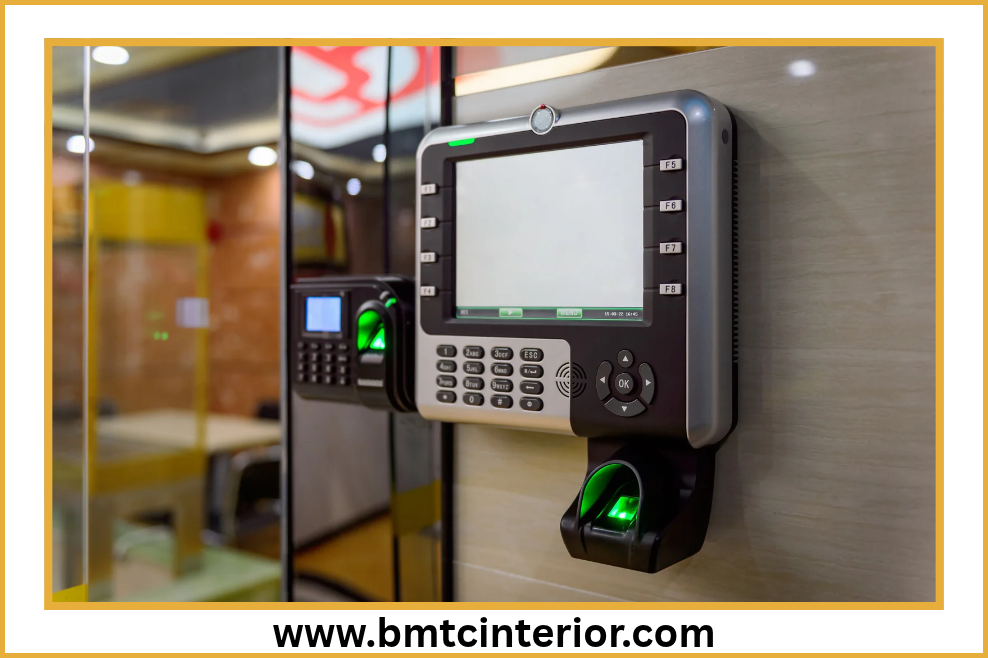
Card & Biometric
Credential Options
IP & PoE
Network-Based Systems
Survey First
Specification Approach
Access-controlled entrance door with a wall-mounted card reader
SERVICE OVERVIEW

What Access Control Installation Involves

Access control is the system that decides who can enter which door, at what time, and keeps a record of it. It sits at the junction of security, door hardware, IT networking and building operations — which is why the specification and installation matter as much as the hardware itself.

BMTC installs electronic access control for commercial and residential buildings in Oman. A typical installation includes door readers, door controllers, electric locking hardware, request-to-exit devices, a management software platform and the low-voltage cabling that connects them. Larger projects can add turnstiles, speed gates, video intercoms, visitor management and integration with CCTV, lifts or time-and-attendance systems.

The service suits new-build fit-outs, office refurbishments, retail and restaurant openings, clinics and medical centres, warehouses and industrial facilities, serviced apartments and multi-tenant buildings. It can be delivered as a standalone security package or coordinated with BMTC’s MEP, joinery, civil works and interior fit-out teams so that containment, power and door preparation are completed at the right stage.

Professional specification matters because access control is a system, not a single product. A reader is only as reliable as the lock it drives, the power supply that supports it, the door it is fitted to and the network it reports over. Credential type, fail-safe or fail-secure behaviour, and how personal data is stored all need to be decided against the building’s actual use — not chosen from a catalogue at the last minute.

SYSTEMS WE INSTALL

Access Control Options for Different Buildings and Doors

Systems are selected around the door type, the user group and the level of control required

Proximity card reader mounted beside an office door
Card & Fob Access Control
Offices, Retail & Multi-Tenant Buildings
Proximity card and key-fob readers with individual access levels, time zones and a recorded entry history. Well suited to staff, tenants and contractors who need simple, replaceable credentials.
Biometric fingerprint reader at a secure doorway
Biometric & Facial Recognition
High-Security & Attendance Applications
Fingerprint, palm and facial recognition terminals for doors where credentials cannot be shared. Useful where time-and-attendance records must be tied to a verified individual.
Keypad and smart lock entry panel on a door
Keypad, PIN & Smart Locks
Small Offices, Apartments & Back-of-House Doors
Standalone keypad and PIN locks for doors that do not need centralised control, plus networked smart locks for apartment and serviced-accommodation entry.
Video intercom panel at a building entrance
Video Intercom & Door Entry
Reception, Villa & Apartment Entry
Audio and video door-entry panels for main entrances, gates and reception points, including the option to release the door from an internal monitor or a mobile device where the system supports it.
Turnstile lanes at a commercial building reception
Turnstiles, Speed Gates & Barriers
Lobbies, Staff Entrances & Vehicle Access
Tripod turnstiles, speed gates and boom barriers for lobbies, staff entrances, car parks and site perimeters, integrated with the same credential system used on doors.
Network cabinet housing access control controllers and cabling
Controllers, Integration & Visitor Management
Multi-Door & Multi-Site Systems
Door controllers, power supplies and management software for multiple doors or sites, with optional integration to CCTV, lift control, time-and-attendance and a visitor booking workflow.
SYSTEM COMPONENTS

Hardware, Credentials and Door Considerations

Practical guidance on the components that determine reliability, safety and serviceability

Component Typical Use Practical Consideration
Proximity card / fob Staff, tenant and contractor credentials Cards can be lost or shared; plan how they are issued, suspended and replaced.
Biometric reader Doors requiring verified individual identity Biometric data is sensitive personal data — storage location, consent and retention must be decided before installation.
Electromagnetic lock Controlled doors needing high holding force Fail-safe by design — releases when power is lost, which matters on escape routes.
Electric strike Doors where the existing latch is retained Can be fail-safe or fail-secure; the choice must match the door’s role in an evacuation route.
Request-to-exit device Free egress from the inside of a controlled door Required so that occupants can always leave without a credential.
Door controller & power supply Decision-making and power for each door Battery backup and enclosure location should be agreed at design stage, not improvised on site.
Network / PoE infrastructure IP-based readers, intercoms and controllers IP systems depend on switch ports, VLANs and UPS backup — these should be coordinated with the IT team.
Management software User rights, schedules, reports and audit trail Licensing model, server location and remote access method should be confirmed before purchase.

Door hardware, escape routes and fire safety are interlinked. On any door that forms part of an escape route, locking hardware must be selected so that occupants can leave without a key or card, and the final arrangement should be reviewed against the project’s fire strategy and the requirements of the relevant authority. BMTC will flag these considerations during the site survey; formal sign-off remains with the project’s responsible parties.

WHY IT MATTERS

What a Properly Installed Access Control System Delivers

Practical outcomes for building owners, facilities teams and occupants

Controlled Entry by Door
Each door can be assigned its own access level and time schedule, so staff, cleaners, contractors and visitors only reach the areas they need.
Recorded Entry History
Every authorised entry is logged against a credential and a door, giving an audit trail that is useful for investigations and for reviewing access rights.
Fast Credential Changes
When a staff member leaves or a card is lost, the credential can be disabled centrally rather than relying on a physical key being returned.
Reduced Key Management
Fewer mechanical keys to cut, track and replace across a building, and fewer lock changes after a key is lost.
Integration with Existing Systems
Door events can be linked to CCTV, intercom, lift control and attendance records so the building’s systems work from one policy rather than several disconnected ones.
Scalable to More Doors and Sites
Systems can be specified with spare capacity so that additional doors, floors or sites can be added later without replacing the core platform.
OUR PROCESS

How an Access Control Project Is Delivered

A survey-led route from enquiry to commissioning and handover

01
Enquiry & Brief
Share the building type, door list, user groups and any existing security or IT systems.
02
Site Survey
Review doors, frames, power, containment routes, network access and escape requirements.
03
System Design
Agree credential type, locking method, controller layout, software and integration scope.
04
Installation
Containment and cabling first, followed by door hardware, readers and controllers.
05
Commissioning
Door-by-door testing, fail-safe checks, access-level configuration and integration testing.
06
Handover & Support
Admin training, documentation, credential issue guidance and post-handover support arrangements.
WHERE IT IS USED

Access Control for Different Building Types

Each environment brings different user groups, door types and integration requirements

Open-plan office interior with glazed partitions
Corporate Offices
Retail store interior with display units
Retail & Showrooms
Restaurant and café interior with seating
Restaurants & Cafés
Hotel lobby and reception area
Hotels & Hospitality
Medical clinic reception and corridor
Clinics & Healthcare
Classroom and educational facility
Education
Warehouse and industrial storage space
Warehouses & Industrial
Apartment building entrance and lobby
Apartment Buildings
SERVICE COVERAGE

Access Control Installation Across Oman

Supporting commercial and residential buildings in Muscat and major cities across the Sultanate

BMTC’s access control installation service is based in Muscat and supports projects in Seeb, Al Khuwair, Ruwi, Bawshar, Qurum and Ghubrah, as well as Sohar, Sur, Nizwa, Salalah and Ibri. For projects outside these areas, availability and mobilisation should be confirmed at enquiry stage.

Local conditions affect how access control is specified. Coastal humidity can affect exposed external readers and locking hardware, while inland sites may see higher dust levels around perimeter doors. External gates, car park barriers and plant room doors typically need hardware rated for the environment, and where an IP system is used, the building’s network and backup power arrangement need to be agreed with the IT team before installation begins. Oman’s Personal Data Protection Law also makes the handling of biometric and entry records a practical consideration, so the location and retention of personal data should be decided at design stage.

📍
Muscat
📍
Seeb
📍
Al Khuwair
📍
Ruwi
📍
Bawshar
📍
Qurum
📍
Ghubrah
📍
Sohar
📍
Sur
📍
Nizwa
📍
Salalah
📍
Ibri
FAQ

Access Control Frequently Asked Questions

Practical answers for building owners and facilities teams planning an installation in Oman

What is access control installation?
It is the installation of electronic hardware and software that decides who can open which door, and when. A typical system includes a reader, a door controller, electric locking hardware, a request-to-exit device and management software, connected by low-voltage cabling.
What types of access control do you install?
Card and fob systems, biometric fingerprint and facial recognition terminals, keypad and smart locks, video intercom and door entry, turnstiles, speed gates and vehicle barriers, plus multi-door controllers, software and visitor management.
Should I choose cards, fingerprints or mobile credentials?
It depends on the users and the doors. Cards are simple and easy to replace but can be shared. Biometrics tie entry to a verified individual but involve sensitive personal data and need a clear retention policy. Mobile credentials suit sites where staff already carry managed devices. Many buildings use a mix — for example, cards for most staff and biometrics for a secure plant room.
Can access control integrate with CCTV and attendance?
Yes, where the chosen platforms support it. Door events can be linked to camera footage, and entry records can feed a time-and-attendance process. Integration scope should be confirmed at design stage because it depends on the specific hardware and software being used.
What happens to the doors during a power cut?
It depends on the locking hardware. Electromagnetic locks are usually fail-safe, meaning they release when power is lost. Electric strikes can be fail-safe or fail-secure. Doors on escape routes must allow occupants to leave without a key or card, and the final arrangement should be reviewed against the project’s fire strategy.
Can you install access control in an existing building?
Yes. Retrofit installations are common, but the approach depends on door type, whether there is a containment route for cabling, and how power can be supplied to the door. A site survey is normally needed before a firm scope and programme are agreed.
How long does an access control installation take?
Timelines depend on the number of doors, the locking hardware required, containment and cabling routes, whether the building is occupied, and how much integration is involved. A small office installation is a different programme from a multi-floor site. A project-specific programme is provided after the site survey.
What affects the cost of access control in Oman?
Cost is influenced by the number and type of doors, reader technology, locking hardware, controller and power supply requirements, software licensing, containment and cabling distances, integration scope and mobilisation outside Muscat. A quotation is prepared against the surveyed scope rather than a per-door headline rate.
Do you carry out a site survey?
Yes. A survey is the normal starting point for anything beyond a single-door installation, because door construction, frame condition, cable routes, power availability and network access all affect the specification. Survey availability and any associated terms are confirmed at enquiry stage.
Can one system cover multiple sites?
Yes, where the platform supports it. Multi-site systems can be managed from a central software instance over a suitable network connection, with access rights and reports consolidated. The network and server arrangement should be agreed with the client’s IT team during design.
What is included at handover?
Depending on the agreed scope, handover can include administrator training, user guides, door and device schedules, configuration records and credential-issue guidance. The exact documentation package is confirmed at quotation stage so that it meets the client’s operational needs.
Which areas of Oman do you cover?
BMTC supports projects in Muscat, including Seeb, Al Khuwair, Ruwi, Bawshar, Qurum and Ghubrah, as well as Sohar, Sur, Nizwa, Salalah and Ibri. Availability for projects outside these areas should be confirmed at enquiry stage.

Ready to Secure Your Building Entrances?

Send us your door list, floor plan or security requirements and we will review the scope and advise on the next steps. For urgent enquiries, call or WhatsApp directly.

Call Us
+968 9723 9729
Speak directly with the projects team
Call Now →
WhatsApp
+968 9723 9729
Send drawings or project details
WhatsApp Now →
Email Us
Bmtcme@gmail.com
Attach plans and specifications
Send Email →