Muscat’s fast food sector is experiencing remarkable growth. According to industry data, Oman’s fast-food industry is poised for significant expansion, driven by rising household incomes, increased tourism activity, and a developing retail sector. Major acquisitions, such as Americana Restaurants’ purchase of 46 Pizza Hut outlets in Oman, underscore the sector’s vitality and competitive intensity. With government investments in leisure and hospitality projects under the national 2040 Tourism Strategy, demand for quick service options catering to both locals and tourists continues to rise.
In this dynamic landscape, fast food interior design has become a strategic differentiator. A well-designed fast food restaurant does more than serve meals—it optimizes customer flow, accelerates service speed, and reinforces brand identity. For restaurant owners in Muscat, investing in professional interior design translates directly to operational efficiency, higher table turnover, and stronger customer loyalty.
Why smart layout Matters in fast food restaurant design
Effective fast food restaurant design goes beyond aesthetics—it is about optimizing space, ensuring smooth customer flow, and reinforcing your brand. In the fast food industry, where speed and efficiency are paramount, the right layout can enhance both operational performance and customer satisfaction.
A well-planned layout accommodates both customer movement and staff operations while maximizing limited space. Research shows that more than half of restaurant operators have invested in kitchen equipment and redesign specifically to increase operational efficiency. In small spaces, that focus on efficiency becomes even more critical—compact spaces do not allow a single inch for neglected or wasted area.
For growing businesses in Muscat, professional fast food interior design addresses the unique challenges of quick-service operations: high foot traffic, rapid table turnover, and the need for seamless integration of dine-in, takeout, and delivery channels. A smart layout ensures that every square meter serves a purpose, from the entrance to the exit.
Essential Elements of Fast Food Interior Design
Creating a fast food restaurant that delivers both speed and comfort requires careful attention to several critical design elements:
1. Strategic Layout and Customer Flow
The most effective fast food layouts typically follow a linear flow and incorporate the following elements:
- Clear entrance area with visible menu boards
- Well-defined ordering zone that minimizes confusion
- Separate pick-up area for dine-in, takeout, and delivery orders
- Adequate seating arranged in zones for different customer types
- Clear path to the exit to prevent bottlenecks
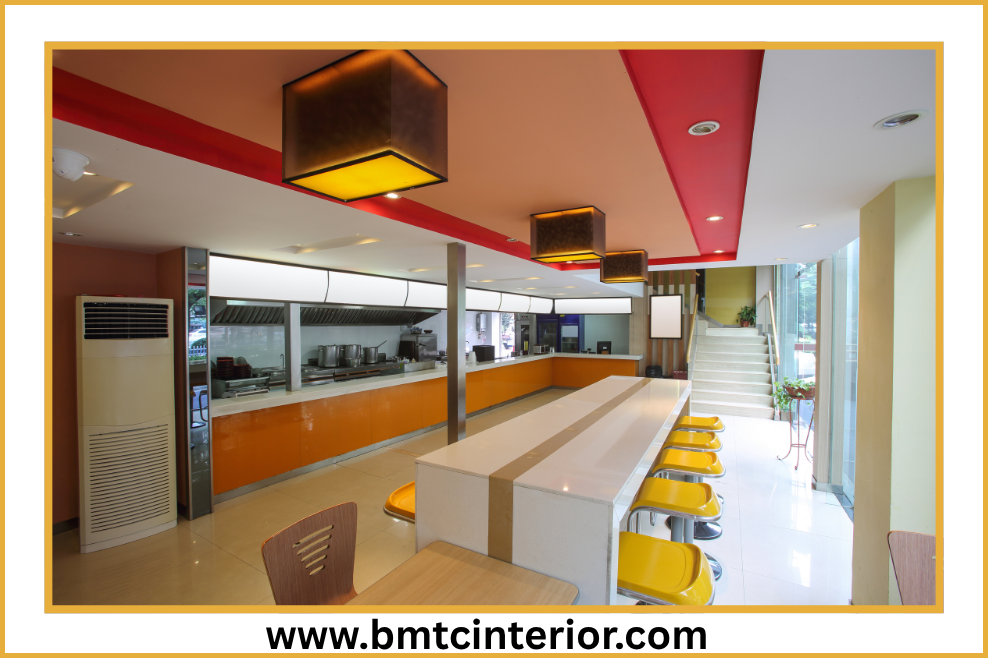
Strategic use of space involves creating distinct zones for dine-in customers, takeout patrons, and delivery drivers. A mix of seating options—booths, tables, and high-tops—maximizes capacity while accommodating different group sizes. The kitchen layout must minimize staff movement and maximize efficiency, with adequate space for lines during peak hours.
Customer experience and comfort should never be sacrificed for speed. Sufficient space between tables, clear wayfinding signage, and separate zones for families, individuals, and groups create a more customer-friendly environment. Modern fast food establishments are increasingly designing for different visit types—whether families seeking sit-down meals, students ordering on apps for pick-up, or professionals on lunch breaks making quick runs.
2. Service Counter and Kitchen Design
The service counter and kitchen layout are crucial components that directly impact operational efficiency and customer satisfaction. The service counter should facilitate quick, efficient operations through thoughtful design.
Kitchen workflow optimization requires reducing backtracking, minimizing congestion, and supporting consistent execution across shifts. Efficient movement between workstations and safe separation of hot, cold, and cleaning tasks ensure fast service during peak periods.
For fast food outlets in Muscat, choosing the right kitchen layout—whether assembly line, island, or zone style—directly impacts workflow and service speed. Professional design ensures that kitchen and service areas are positioned to minimize travel distances, ensuring hot food reaches customers promptly.
3. Technology Integration for Digital Ordering
Modern fast food restaurants are increasingly technology-driven, with more digital interfaces supporting high-efficiency transactions. The contemporary layout moves beyond traditional counter排队 systems toward integrated digital solutions.
Digital ordering kiosks, mobile ordering integration, and dedicated pick-up points for online orders reduce wait times and streamline the customer journey. Many quick-service brands are rethinking the idea of a single pick-up point, moving toward multiple pass-thru and walk-up windows to separate payment, food handoff, and mobile or delivery orders.
For Muscat’s fast food establishments, technology integration within the interior design creates a digital-first layout that signals modernity and convenience. This approach improves the speed of service while reducing staff fatigue at service points.
4. Visual Design and Brand Alignment
Visual design and brand alignment are essential for creating a memorable fast food experience. The design should reflect the brand’s personality while maintaining a clean, approachable aesthetic.
Current trends in fast food design lean toward warmer and more approachable styles with new color palettes and light fixtures. After extensive consumer research, some leading brands have refined their interiors with branded artwork, integrated greenery, redesigned menu boards, updated lighting, and warmer color palettes. These elements create a layered sensory experience that brings the brand’s commitment to life and fosters a warm, welcoming environment for guests.
For fast food restaurants in Muscat, visual design must balance brand identity with local cultural sensitivity. Bright colors and colorful tones are often dedicated to fast food and quick-service restaurants, making them recognizable and attracting customers.
5. Lighting That Enhances Speed and Comfort
Lighting plays a dual role in fast food interior design—it must support operational efficiency while creating a comfortable dining atmosphere. Strategic lighting influences how long customers stay and how much they consume.
Bright, well-lit spaces near service counters and ordering areas support quick transactions and clear menu visibility. Warmer, dimmer lighting in seating areas can make the atmosphere more comfortable and relaxed, encouraging guests to stay longer. The balance between these zones is critical for optimizing table turnover without compromising customer comfort.
Updated lighting fixtures with warmer color palettes are becoming increasingly popular in fast food design, creating environments that feel more inviting and less institutional.
6. Material Selection for Durability and Hygiene
Selecting finishes that balance aesthetics, durability, and hygiene is essential for commercial fast food environments. High-traffic areas demand materials that withstand frequent cleaning, spills, and heavy use without losing their appearance.
Durable surfaces such as porcelain tiles, engineered stone, and commercial-grade laminates offer the perfect balance of beauty and resilience. Easy-to-clean materials are non-negotiable in fast food settings, where hygiene standards are paramount. Compact and stylish furniture maximizes space while maintaining visual appeal.
For Muscat’s fast food establishments, material choices must also consider the local climate and dust conditions. Finishes that resist staining and require minimal maintenance ensure the restaurant maintains its premium appearance over time.
The Rise of Compact and Efficient Fast Food Formats
The definition of the restaurant is evolving. Spaces are becoming more creative and efficient as operators embrace multifunctional models to maximize functionality. Many businesses plan to open new locations with compact designs, shifting away from larger-scale traditional layouts.
This trend toward smaller footprints has led quick-service establishments to adopt more efficient layouts amidst rising costs and tight margins. Success in today’s restaurant landscape depends on extracting maximum impact from every square foot.
For fast food operators in Muscat, compact design offers significant advantages:
- Lower build costs and increased site flexibility
- Ability to develop on smaller sites previously not viable
- Reduced upfront investment while maintaining operational capacity
- Faster service through optimized workflows
The challenge for operators working in small footprints becomes how to maximize what their space can do—both from operational and customer experience perspectives. Hyper-efficient design principles consistently create high-impact, high-functioning designs that can scale with growing brands.
Navigating Local Regulations and Approvals in Muscat
Fast food interior design in Muscat involves navigating specific regulatory requirements that owners cannot afford to overlook. Professional design must comply with Muscat Municipality and Civil Defence regulations to create safe, compliant, and efficient spaces.
Key requirements include Civil Defence fire safety clearance with extinguishers, emergency exits marked, smoke detection, fire-resistant materials, evacuation plans, and staff training. Commercial kitchen areas must include automatic fire suppression systems over all cooking equipment, Class K fire extinguishers, emergency lighting, exit signs, and smoke and heat detection systems.
Additionally, restaurants require Commercial Registration from the Ministry of Commerce, Industry, and Investment Promotion, a Municipality Trade License, and a Food Safety Permit from the Ministry of Health. Fast food establishments must be established in suitable locations with minimum area requirements.
Experienced interior contractors understand this regulatory landscape intimately. Professional fitout contractors handle complex paperwork and permitting processes, saving restaurant owners from costly delays and compliance headaches.
The BMTC Advantage for Fast Food Projects in Muscat
Established in Muscat in 2008, BMTC Interior Design & Fitouts has spent over 15 years delivering exceptional commercial interior design solutions across Oman. With a proven track record of completing over 500 commercial projects across seven cities, BMTC has earned a reputation as one of Muscat’s most trusted commercial interior contractors.
Turnkey Project Delivery
Fast food projects involve many technical layers—design, approvals, construction, branding, and engineering. BMTC simplifies this process through seamless coordination from concept design to final handover. This streamlined approach allows owners to focus on culinary excellence while professionals handle every aspect of restaurant development.
In-House Execution Capabilities
Civil works, joinery, MEP engineering, and branding services operate under unified management. This integration ensures consistent quality, cohesive project timelines, and seamless communication throughout every project phase. Custom counters, seating, and feature walls receive meticulous craftsmanship in BMTC’s fully equipped joinery facility.
Bespoke Branding and Signage Solutions
Custom signage, illuminated displays, and 3D branding elements align perfectly with fast food architectural language. From entrance statements to interior wayfinding, every brand touchpoint reinforces identity while maintaining operational focus.
Authority Approval Management
Navigating Muscat Municipality and Civil Defence regulations presents significant challenges for fast food developers. BMTC handles all necessary permits and compliance documentation, eliminating administrative burdens and preventing costly project delays. Every project begins with a physical site visit—whether a restaurant in Lamar Business Center, a retail unit at Mall of Oman, or a venue in Al Mouj.
Comprehensive Hospitality Experience
BMTC brings extensive experience across the hospitality sector, including fast food establishments, casual dining venues, and quick-service restaurants. This diverse expertise ensures practical, proven solutions for every service style. Understanding the unique operational requirements of fast food—from high-volume throughput to rapid table turnover—ensures designs that perform as efficiently as they appear.
Frequently Asked Questions About Fast Food Interior Design in Muscat
Q: How does fast food interior design impact service speed in Muscat?
Professional fast food design optimizes customer flow through strategic layouts, clear ordering zones, and separate pick-up areas. Efficient kitchen workflows and technology integration reduce wait times and improve operational efficiency. Research shows that well-designed commercial interiors enhance both speed and customer satisfaction.
Q: What are the current fast food design trends for 2026?
Current trends focus on warmer color palettes, updated lighting fixtures, and branded artwork that creates layered sensory experiences. Compact formats and digital-first layouts are increasingly popular, with many brands adopting smaller footprints and more efficient designs. Technology integration, including digital ordering kiosks and mobile pick-up points, is becoming standard.
Q: How long does a fast food fitout take in Muscat?
Project timelines depend on restaurant size, design complexity, and material selection. Standard commercial fast food fitouts typically require between 6 and 12 weeks. BMTC’s turnkey approach minimizes delays through coordinated in-house execution and proactive approval management.
Q: What regulations must fast food restaurants comply with in Muscat?
Fast food restaurants require Commercial Registration from MOCIIP, a Municipality Trade License, a Food Safety Permit from the Ministry of Health, and Civil Defence Fire Safety Clearance. Fire safety requirements include extinguishers, emergency exits, smoke detection, fire-resistant materials, evacuation plans, and staff training. Commercial kitchens need automatic fire suppression systems and Class K fire extinguishers.
Q: Is investing in professional fast-food interior design worth the cost?
Absolutely. With Oman’s fast food industry poised for significant growth, professional design differentiates your establishment from competitors. A well-designed fast food restaurant attracts more customers, increases table turnover, and builds lasting brand loyalty. Professional design also ensures regulatory compliance, preventing costly fines or closure.
Q: Why choose BMTC for fast food interior design in Muscat?
BMTC combines 15+ years of Omani market expertise with comprehensive in-house capabilities spanning design, joinery, MEP engineering, and branding. Their turnkey project delivery, authority approval management, and unwavering commitment to quality ensure exceptional fast food results.
Transform Your Fast Food Restaurant for Speed and Success Today
Your fast food environment communicates your brand’s commitment to quality, efficiency, and customer satisfaction before a single order is placed. Investing in professional fast food interior design in Muscat positions your business for sustained growth and market leadership in the Sultanate’s thriving quick-service sector.
Do not allow inefficient layouts or outdated designs to limit your business potential. BMTC Interior Design & Fitouts possesses the expertise, resources, and local knowledge to transform your fast food restaurant into a destination that delivers speed, comfort, and lasting brand impact.
Ready to create a fast food restaurant that delivers smart layout and quick service?
📞 Call BMTC today at +968 9723 9729
📧 Email: sales@bmtcinterior.com
📍 Visit their showroom at Lamar Business Center, Al Ghubrah Street, Muscat 111, Oman