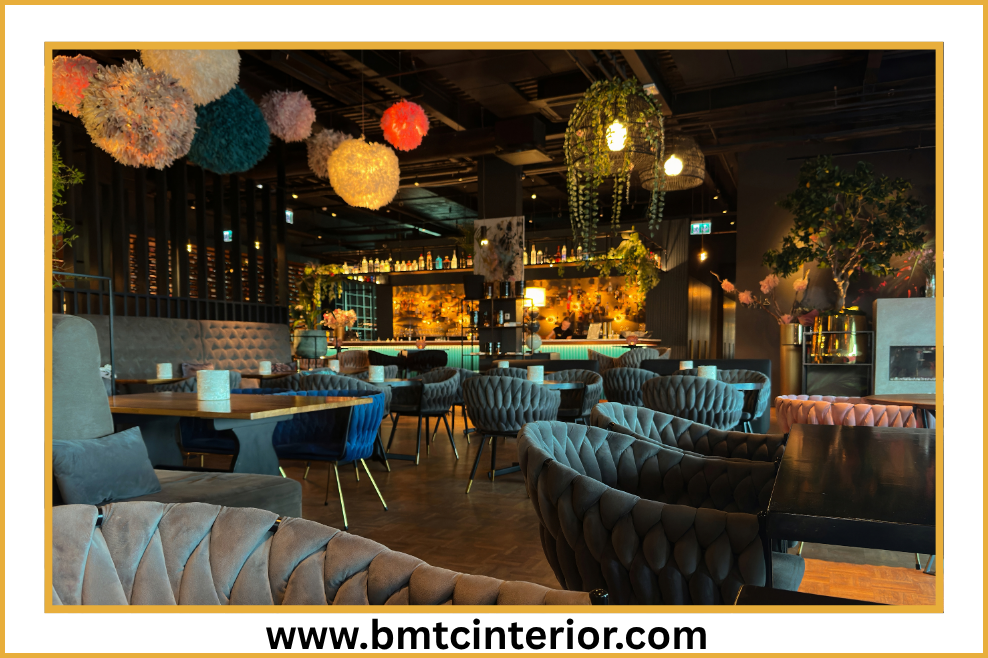
Muscat’s dining scene is undergoing a remarkable transformation. International tourism growth and the rise of premium dining concepts have pushed restaurants to become architectural experiences rather than simple eateries. From the waterfront destinations of Al Mouj to the elegant districts of Shatti Al Qurum and Madinat Sultan Qaboos, modern dining brands are competing not only in cuisine but also in visual identity and spatial experience.
For restaurant owners, investors, and hospitality entrepreneurs, commercial restaurant interior design in Muscat has evolved into a strategic business imperative. In 2026, luxury restaurant interior design represents a highly strategic blend of cultural authenticity, technical compliance, spatial storytelling, and operational efficiency. A well-designed restaurant interior attracts customers, enhances dining experiences, increases average spend, and builds brand loyalty that drives repeat business.
BMTC Interior Design & Fitouts, a Muscat-based design and construction firm established in 2008, has spent more than 15 years crafting luxury hospitality environments across Oman. Their expertise lies in delivering turnkey restaurant fit-out solutions, guiding clients from concept development to final municipality approvals.
This guide explores the principles of commercial restaurant interior design in Muscat, the technical framework for modern dining spaces, and why strategic design has become essential for success in Oman’s competitive F&B market.
Why Restaurant Interior Design Matters for Modern Dining Brands
First Impressions Drive Footfall and Revenue
Your restaurant’s interior is the first thing customers notice when they walk through the door. A well-designed space communicates quality, professionalism, and attention to detail. In Muscat’s competitive dining market, where word-of-mouth and social media drive significant business, a visually appealing interior encourages customers to share their experience—bringing new diners through your doors.
Design Influences Dining Decisions
Research consistently shows that customers make dining decisions based on atmosphere as much as cuisine. A thoughtfully designed restaurant with proper lighting, comfortable seating, and logical flow encourages customers to stay longer, order more, and return regularly. When the dining environment matches the quality of the food, customers perceive higher value and are willing to pay premium prices.
Brand Differentiation in a Crowded Market
With new restaurants opening across Muscat, Seeb, and Al Khuwair, standing out requires more than great food. Your restaurant’s interior design communicates your brand identity, values, and market positioning. Whether you are a fine-dining establishment, a contemporary casual restaurant, or a fusion concept, your interior tells your story.
Customer Experience Builds Loyalty
Modern diners want more than just a meal—they want an experience. Cozy seating, warm lighting, and inviting atmospheres encourage customers to linger, explore the menu, and return regularly. Restaurants that invest in creating memorable dining experiences build loyal customer bases that drive sustainable growth.
Key Elements of Commercial Restaurant Interior Design in Muscat
Creating a successful restaurant interior requires attention to several key design elements. Each element works together to create a cohesive space that delights diners and drives business performance.
Layout and Space Planning
Effective restaurant layout maximizes customer flow, optimizes staff efficiency, and creates a welcoming atmosphere. Spatial planning was an integral part of the process for leading hospitality projects, creating a journey of discovery for the senses amongst culinary offerings.
Key layout considerations include:
- Customer flow — logical pathways from entry to seating to service areas
- Seating configurations — diverse options including stools, dining chairs, and banquette seating
- Flexible spaces — areas that adapt to different service styles and times of day
- Efficient staff circulation — minimizing congestion behind the scenes
The Kitchen restaurant at Kempinski Al Mouj exemplifies this approach. The facility spreads over 220 sq m of indoor and 140 sq m of outdoor space, with cozy seating groups playfully placed throughout and divided by tall, bronzed screens. The space had to provide a buffet during breakfast and à la carte service for lunch and dinner for 250 seats, with buffet units designed to be flexible and adaptable.
Cultural Storytelling Through Design
Luxury restaurant interiors in Oman are no longer just about beautiful décor—they represent a strategic blend of cultural authenticity and spatial storytelling. Successful restaurant interior design in Oman projects uses the physical environment to tell a story that diners can connect with.
The Em Sherif Restaurant at the St. Regis Hotel in Muscat exemplifies this approach. The interiors adopt a palette of blue and white, echoing the sea and sky. High ceilings and expansive windows heighten the sense of lightness, while custom-designed features such as Moucharabieh screens and bespoke wallpaper add a touch of traditional craftsmanship and texture. Outdoor terraces and a winter garden expand the dining experience, connecting guests to both sea and sky.
Creative ways to tell your brand’s story through restaurant design include:
- Omani patterns and motifs woven into textiles, wallpapers, or feature walls
- Local materials such as Omani stone, marble, and natural wood
- Art installations that celebrate Omani heritage
- Custom joinery that reflects the restaurant’s unique identity
Color Palette and Materials
Color plays a significant role in restaurant design. The right palette creates atmosphere, appetite appeal, and brand recognition. In Muscat, successful restaurant interiors often draw inspiration from Oman’s landscapes, textures, and palette.
The Kitchen restaurant at Kempinski Al Mouj features an earthy blend of Omani hues, delineated marble floors and walls, honed and polished textures juxtaposed with a strong presence of deep warm metals, creating a strong sensory experience.
Material selections that work well for restaurants include:
- Marble and stone — adding luxury and durability
- Wood finishes — creating warmth and comfort
- Brass and metal — adding sophistication and visual interest
- Textured finishes — creating depth and personality
- Ceramic surfaces — elegant, durable, and easy to maintain
At the Mandarin Oriental in Muscat, Atlas Concorde’s ceramic surfaces play a defining role across dining spaces. In the lounge restaurant, stone-effect flooring is combined with the warmth of wood, realistically reinterpreting the refined details of oak with soft grains and undulating shades that amplify the feeling of comfort and welcome for guests.
Lighting Design
Lighting is one of the most powerful tools in restaurant interior design. Proper lighting creates atmosphere, highlights architectural features, and enhances food presentation. Modern restaurant designs incorporate custom lighting scenarios that can be adjusted to suit different times of day, events, or seasons.
Effective restaurant lighting strategies include:
- Warm ambient lighting — creating a cozy, inviting atmosphere
- Focused task lighting — illuminating tables and food presentation
- Accent lighting — highlighting architectural features and artwork
- Layered lighting — combining ambient, task, and accent lighting
- Adjustable systems — adapting to different times of day and service styles
Acoustic Engineering for Comfort
In busy restaurants, noise can ruin the dining experience. Advanced acoustic engineering is now a standard feature in premium restaurant design. Creative solutions include:
- Acoustic panels integrated into ceilings and walls
- Carpeting and soft furnishings that absorb sound
- Strategic layout that separates busy areas from quieter dining zones
- Sound masking systems that maintain comfortable noise levels
The result is a space where guests can enjoy conversation without shouting—a hallmark of premium dining experiences.
Branding Integration
Your restaurant’s interior is a three-dimensional expression of your brand. Commercial restaurant interior design in Muscat must incorporate branding elements seamlessly throughout the space.
Key branding considerations include:
- Consistent color schemes — aligning with brand guidelines
- Custom signage — integrating 3D signage, neon branding, and digital displays
- Branded materials — from menus to tableware
- Spatial storytelling — using design to communicate brand values
BMTC integrates 3D signage and neon branding into restaurant spaces, helping businesses in Bawshar, Seeb, and Sohar create cohesive identities that start from the storefront and continue through the interior experience.
Trends Shaping Restaurant Interior Design in Muscat
Several trends are influencing commercial restaurant interior design in Muscat. Understanding these trends helps restaurant owners create spaces that feel current, relevant, and appealing.
Omani Cultural Motifs with Modern Minimalism
A fusion of Omani cultural motifs with modern minimalism defines luxury restaurant design in Oman. This approach combines traditional Omani patterns and materials with clean, contemporary lines, creating spaces that feel both grounded and forward-thinking.
Experiential Dining Journeys
Modern restaurants are designed as journeys rather than destinations. The Kitchen restaurant concept aims to provide diners a journey through “the Boulevard of Delights,” with guests led down a deconstructed path that gently guides them to explore culinary delights. Through this faceted path, guests discover various staging counters and seating areas, creating a journey of discovery for the senses.
Warm Color Palettes and Layered Textures
Warm color palettes and layered textures add depth and personality to restaurant spaces. In Oman, this translates to earthy blends, natural materials, and rich textures that create sensory experiences unlike any other.
Indoor-Outdoor Integration
Muscat’s climate makes indoor-outdoor dining highly desirable. Modern restaurant designs incorporate large glass doors that open onto terraces or courtyards, covered outdoor seating, and consistent design language that flows from inside to outside. The Mandarin Oriental’s dining spaces and outdoor areas reflect this trend, with ceramic surfaces featured across both indoor and outdoor settings.
Art as a Fundamental Design Component
Art is no longer positioned as a finishing touch—it has become a fundamental component of interior design. In Oman’s restaurant spaces, artwork contributes to atmosphere, narrative, and identity rather than simply filling walls.
Sustainable and Eco-Friendly Design
Sustainable and eco-friendly designs are becoming increasingly important in the Omani market. This encompasses energy-efficient lighting and HVAC systems, sustainable materials such as bamboo and reclaimed wood, and design for longevity that reduces the need for frequent renovations.
Immersive Customer Experiences
The trend toward experiential dining influences restaurant design, moving beyond transactions to create memorable experiences that engage all five senses. Technology such as digital menus and interactive displays enhances customer engagement.
BMTC’s Approach to Restaurant Interior Design
BMTC Interior Design & Fitouts has been a cornerstone of Oman’s interior design industry for over 15 years. Since its establishment in 2008, the company has delivered hundreds of projects across Muscat, Seeb, Boushar, Quram, Al Khuwair, and beyond.
Turnkey Design-to-Branding Model
One of BMTC’s defining strengths is its end-to-end turnkey delivery system, which includes:
- Concept Development
- 3D Visualization and Design
- Municipality & Civil Defence Approvals
- MEP Engineering
- Civil Construction
- Custom Joinery & Furniture
- Branding & Signage
- Final Installation
This integrated model ensures restaurant owners avoid coordination challenges between multiple contractors, dramatically reducing delays.
Regulatory Expertise
One of the most critical phases of any restaurant fit-out in Muscat is securing legal permits. BMTC specializes in the seamless acquisition of Muscat Municipality and Civil Defence (PACDA) approvals, ensuring every design meets strict fire safety and building codes. The in-house compliance team ensures projects move forward without costly delays.
In-House Capability
BMTC operates its own joinery workshop and MEP team, ensuring custom furniture, display cases, and wooden elements are crafted to exact specifications with uncompromising quality. The in-house MEP team ensures electrical, mechanical, and plumbing systems work seamlessly in restaurant environments.
Hospitality Design Expertise
BMTC approaches hospitality design holistically, combining architecture, branding, and operational planning. The company’s expertise spans:
- Fine dining restaurants — premium spaces for elevated dining experiences
- Casual dining establishments — welcoming environments for everyday dining
- Cafés and bistros — cozy spaces for coffee and light meals
- Hotel and resort restaurants — integrated dining experiences within hospitality venues
- Specialty dining concepts — unique spaces for distinctive culinary offerings
The BMTC Design Process for Restaurants
BMTC’s professional process ensures every restaurant project is delivered on time, on budget, and with uncompromising quality.
1. Concept Development and Creative Brief
Every restaurant project starts with understanding the client’s vision, brand identity, cuisine concept, and operational needs. This phase includes client consultations to understand goals and preferences, brand analysis to ensure design aligns with brand values, site assessment to understand physical constraints and opportunities, and creative brief development that guides the entire project.
2. 3D Visualization and Design
Before any work begins, BMTC creates detailed 3D visualizations that allow clients to see their restaurant before construction starts. This creative process includes spatial planning that optimizes layout and flow, material selection that balances aesthetics, durability, and budget, lighting design that creates the right atmosphere, and furniture and joinery design that is both beautiful and functional.
3. Municipality and Civil Defence Approvals
Creative designs must meet strict regulatory requirements. BMTC specializes in securing Muscat Municipality and Civil Defence (PACDA) approvals, ensuring every design meets fire safety and building codes.
4. MEP Engineering and Civil Construction
A true turnkey solution is defined by technical depth. BMTC provides engineering-led solutions covering precision MEP (Mechanical, Electrical, & Plumbing), ensuring spaces function as beautifully as they look, civil and structural works handling interior modifications with professional accuracy, and bespoke joinery crafting custom furniture in the company’s own facility.
5. Branding, Signage, and Final Installation
The final phase integrates branding elements throughout the space, including 3D signage, neon branding, and digital displays, followed by final installation and handover.
Frequently Asked Questions
What is the cost of commercial restaurant interior design in Muscat?
Costs depend on restaurant size, location, cuisine concept, materials selected, and approval requirements. Professional fit-out companies provide site-based quotations after consultation. BMTC offers transparent pricing with detailed project breakdowns.
How long does a restaurant fitout take in Muscat?
Project timelines vary based on size and approvals, typically ranging from several weeks for small renovations to several months for complete restaurant fit-outs. Authority approvals are often the most time-consuming phase.
Does BMTC handle both design and construction for restaurants?
Yes. BMTC Interior Design & Fitouts is a true turnkey contractor managing everything from concept design and 3D visualization to authority approvals, MEP execution, civil works, joinery, branding, and final handover.
What types of restaurants does BMTC design?
BMTC designs fine dining restaurants, casual dining establishments, cafés and bistros, hotel and resort restaurants, and specialty dining concepts across Oman.
Which areas in Oman does BMTC serve?
BMTC serves Muscat, Seeb, Boushar, Quram, Al Khuwair, Ruwi, Sohar, Nizwa, Sur, and Salalah. The company has delivered projects across the Sultanate’s most prestigious locations, including Al Mouj.
Why is cultural storytelling important in restaurant design?
Cultural storytelling creates authentic dining experiences that resonate with customers. In Oman, incorporating Omani patterns, motifs, and materials creates a sense of place and identity that differentiates restaurants in a competitive market.
How does restaurant interior design impact revenue?
Well-designed restaurants attract more customers, encourage longer stays, increase average spend, and build brand loyalty. Design directly influences dining decisions and repeat business.
Transform Your Restaurant with Professional Interior Design
Muscat’s dining scene is evolving rapidly. Businesses that invest in professional commercial restaurant interior design in Muscat are gaining a measurable edge in customer attraction, brand loyalty, and operational efficiency. Whether you are launching a new fine-dining establishment, renovating an existing restaurant, or expanding your hospitality brand, the quality of your interior design directly impacts your business success.
A thoughtfully designed restaurant interior does more than look beautiful. It tells your brand story, creates memorable dining experiences, and builds a loyal customer base that drives sustainable growth.
BMTC Interior Design & Fitouts
Way No 4551, Lamar Business Center, Al Ghubrah Street, Muscat 111, Oman
📞 +968 9723 9729
📧 sales@bmtcinterior.com
Transform your restaurant vision into a reality with Oman’s trusted interior experts. Contact BMTC today for a consultation.